

The British Museum has incredible artefacts to view, from Egypt to China. I however, was on a mission, a mission to behold the marble sculptures derived from The Parthenon on top of the Acropolis in Athens.
Made between 447BC and 432BC they consist of: a frieze which shows the procession of the Panathenaic festival (the commemoration of the birthday of the goddess Athena); a series of metopes (sculpted relief panels) depicting the battle between Centaurs and Lapiths at the marriage-feast of Peirithoos; and figures of the gods and legendary heroes from the temple’s pediments. Controversially the best-preserved stone carvings that survived on the temple in the early 19th century were removed by Lord Elgin and brought to London, where they have been a fixture of the British Museum ever since.
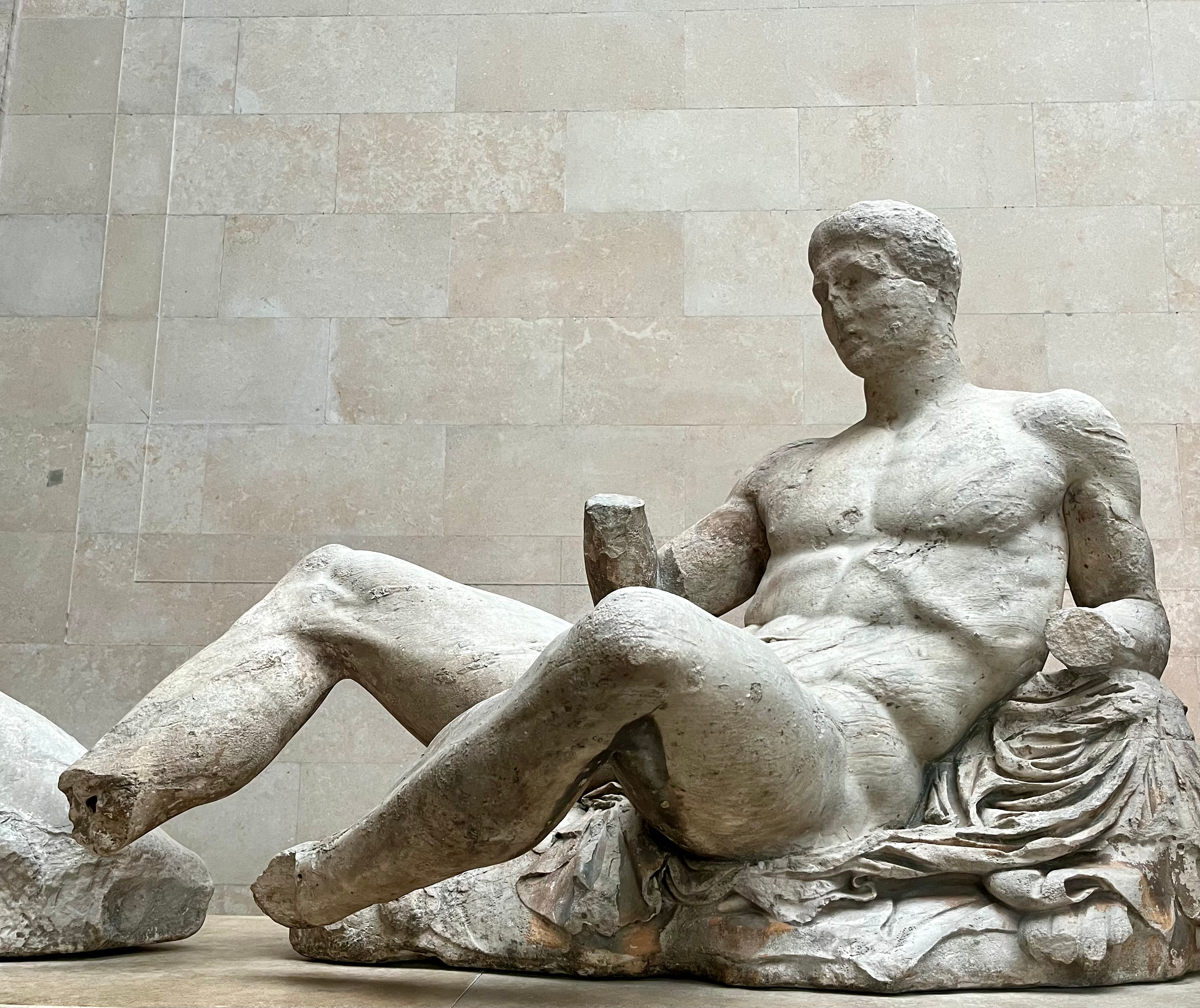
I march to the exhibition hall. As a big ancient history fan all I can think is wow. Thick cream bodices rippled with shadow. The marble ruins are just as I expected- magnificent. Unfortunately the setting is rather bland and stone-wash, not ideal for displaying ancient marble figures. The whole setting lacks contrast. However, mounted warriors cut through the plain walls. I turn and see a Lapith of Thessaly, son of Apollo single handedly battle a Centaur. To my left. another figure casually lays in front of me and emits pleasant, relaxing energy that seems to reverberate through the dull halls. Other images of battle and conflict surround us. There is a sense of fight, just as chisel fought with stone.
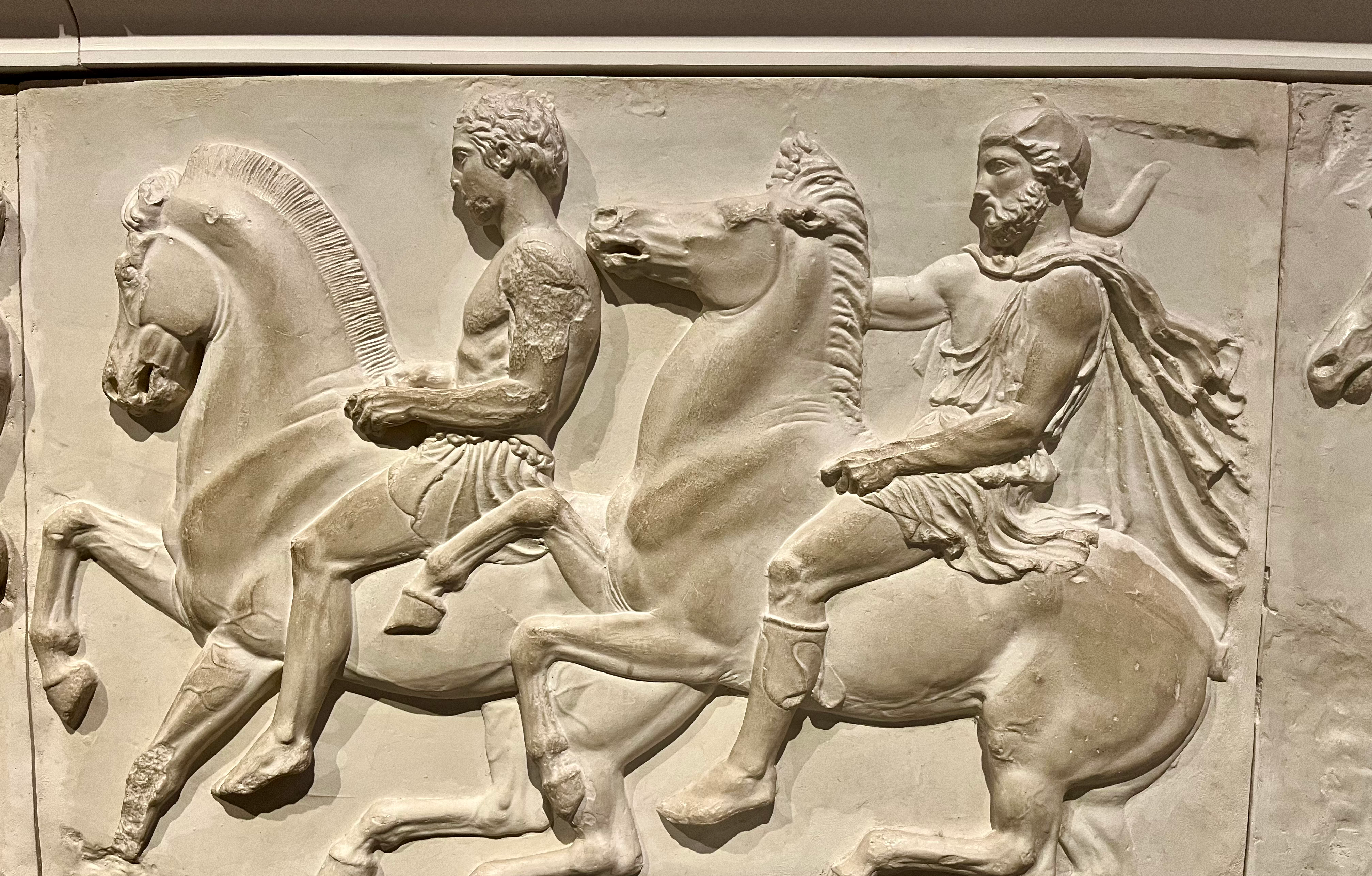
These sculptures, as far back as 447BC are beautifully made, they are part ruined, yet the detail of waved cloth and shredded muscle is a joy to behold.
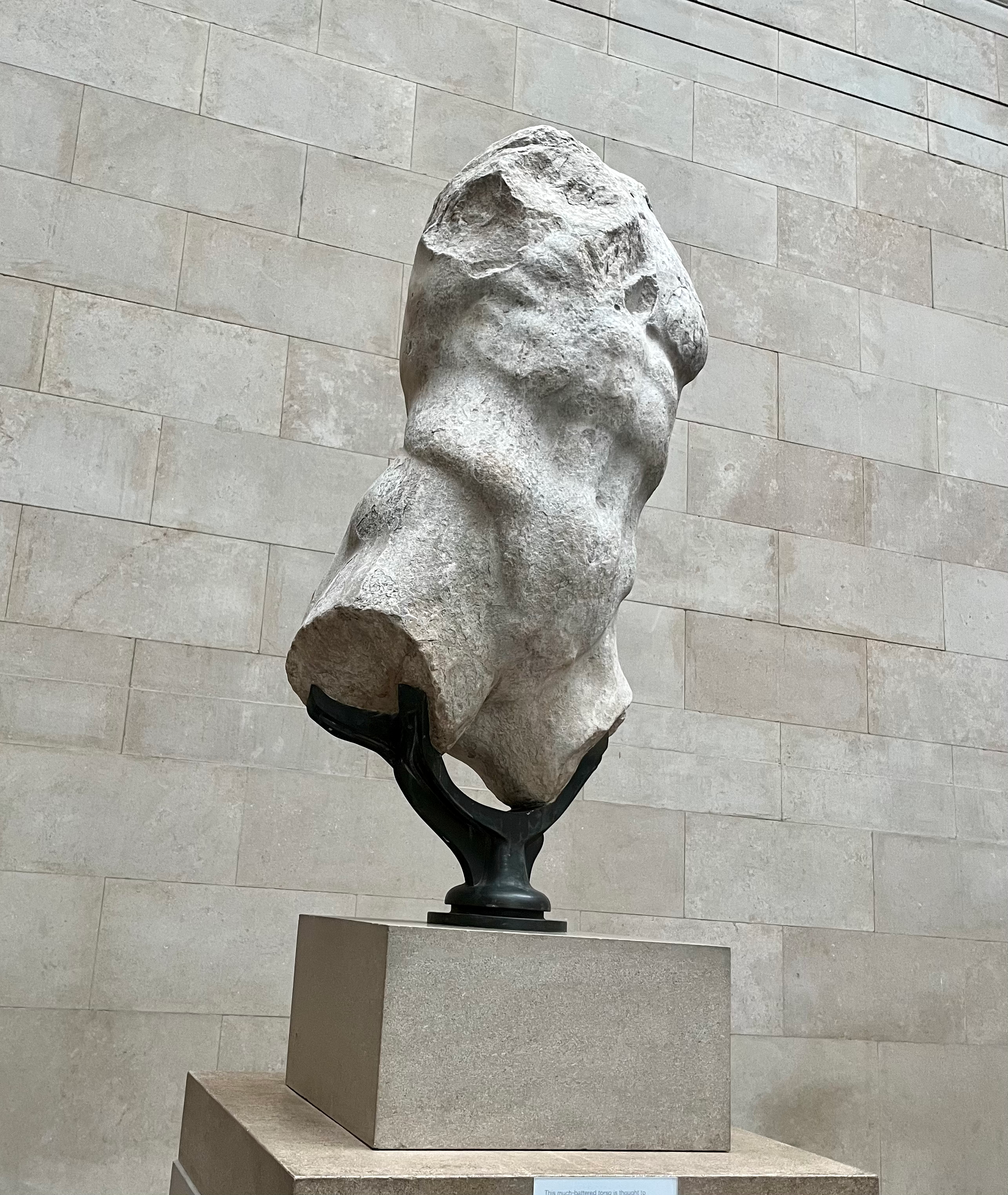
I walk through the cavernous halls and my eyes dance around greedily taking in the ancient culture. I notice the top of an original column from the Parthenon. I reach out to feel it hoping to connect with the ancient world. I am stopped in my tracks by a small sign saying: “Do not touch,”
Ah well, here’s to hoping, here’s to dreaming….here’s to the next 2,500 years.
 Read My Thoughts