
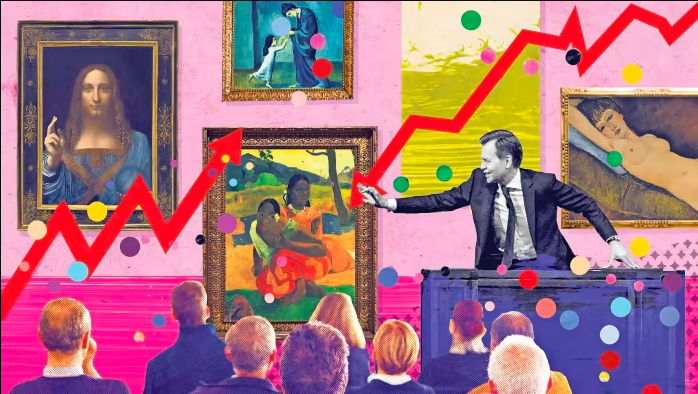
The global art market was significantly impacted in negative way due to the pandemic. Restrictions meant that fair exhibits and auctions were cancelled. There was clear indication of a rally in 2022 to counter the effects and rebounding the market to pre-pandemic levels. However, recent data shows that the global market is still growing yet slowing down. Year on year sales increased just 3% to $67.8bn. With the US remaining the dominant geography and UK and China vying for second place. The higher end of the market continuing to be a key growth factor. Blue chip sales being an important factor in the positive data.
The Bursting of the NFT Bubble:
The blockchain based market appeared robust and lucrative during the first few quarters of 2022. Crypto currencies rallied and Crypto-funded NFT purchases were flying high with a $53mn sale of Pak’s Clock to a group of investors. The NFT art market fell by an incredible 49% to just under $1.5bn. Jack Dorsey- the Twitter founder sold an NFT of his tweet at an original price of $2.9m back in 2021, today it is worth less than $5 a ridiculous 99% devaluation. There is further evidence of the NFT decline, ‘Bored Apes’ a blue chip NFT series saw itself devalue by over 70%. With interest rates rising, pushing up costs, buyers could be looking to put their money towards more validated artists and mediums. The data indicates that investors are looking to saver heavens and more traditional means of acquiring art, less linked to turbulent economic times.

A Mixed Bag For Art Fairs:
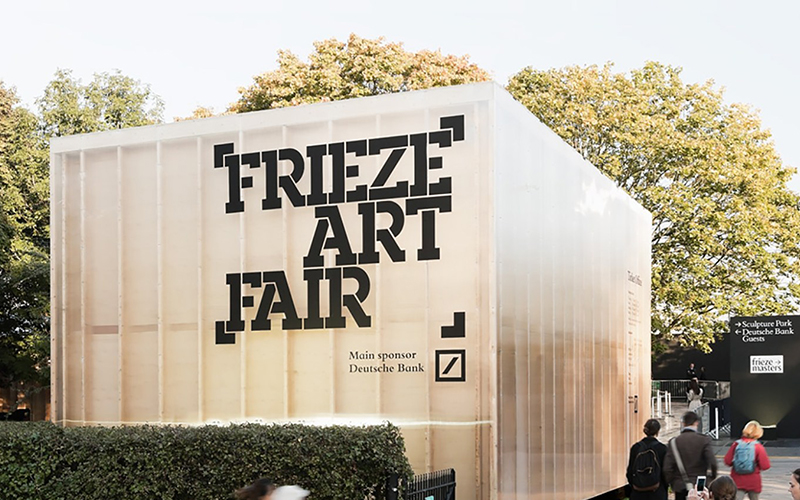
Art fair sales made a significant increase in 2022. Sales from in person art fairs went from 27% of total dealer sales in 2021 to 35% in 2022. Experts and industry professional believe this strong trend to continue into 2023, with 51% of dealers forecasting a further growth in sales for 2023. A spokesperson for the French gallery Almine Rech echoed this sentiment by saying ”European fairs such as Tefaf Maastricht and Art Paris were successful” in terms of sales. This growth is likely to be attributed to the relaxing of restrictions since the pandemic. However, despite this London fairs have been struggling since Brexit. The Masterpiece fair in Chelsea seized to be. Likely due to high inflation and escalating costs, a lack of international artist should not be overlooked. Backing this up is the cancellation of another London art fair: The Art and Antiques Fair Olympia which recently called off its summer show. However, Frieze completes its acquisition of US art fairs: The Armory Show and Expo Chicago. The larger fairs at least in London seem to be holding up providing some hope for the future of the UK art fair market.
A Stagnant Auction Market:
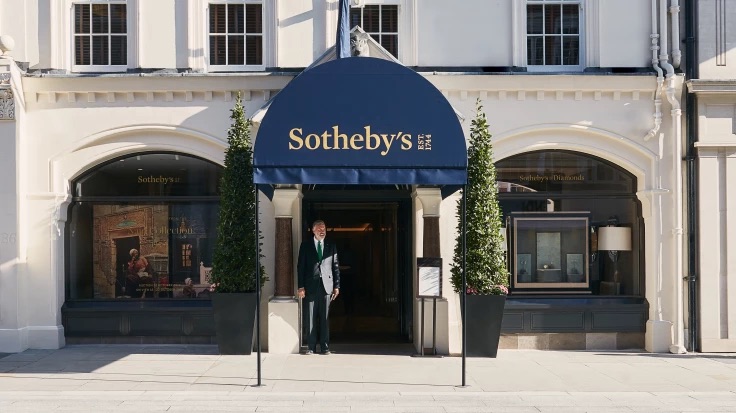
This area of the market has been stagnant over the last 12 months compared to previous years. The usual major geographies of US, China and UK remained top locations in the market covering 76% of auction sales by value. Irrespective of the stagnation, the higher end of the market performed relatively well with Sotheby’s, Christie’s and Philips reporting record – high combined annual revenues of $17.7bn. Sotheby’s broke the European auction record with the sale of Klimt’s Dame mit Fächer (Lady with a Fan), which sold for £85.3mn. There was however, a drop in online-only auctions in 202212. This again is likely driven by pandemic restrictions being lifted as people move away from remote auctions back to in-house. Christie’s reported a decline in auction sales of 24% which again has been attributed to tough post-pandemic times. However, in the middle of the market- Bonham’s reported auction sales increase of 32% to $552mn providing some optimism going into the second half of 2023.
The Russian/Ukraine War:
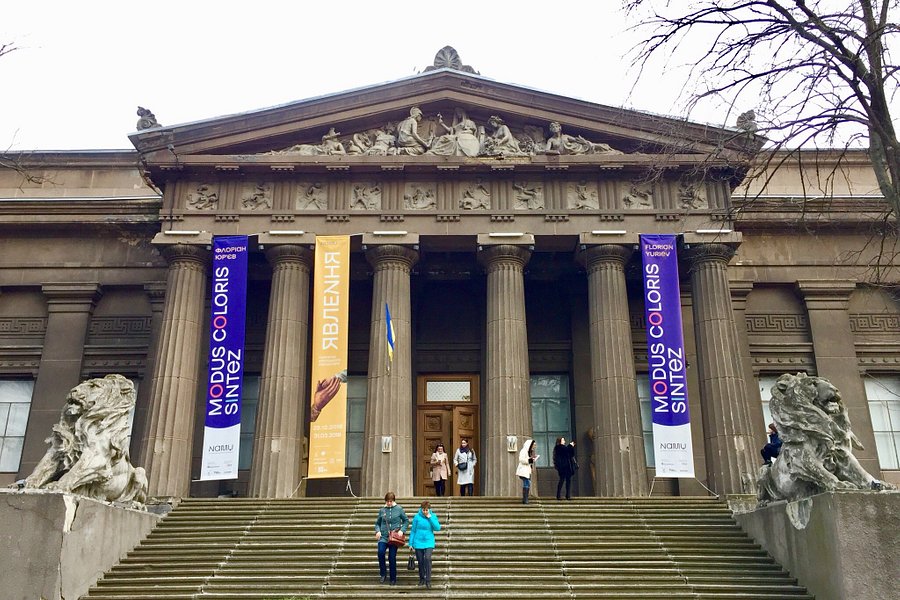
The destruction of the Kuindzhi Art Museum in Ukraine inferred that all hope was lost, yet the Ukrainian market somehow weathered the storm. Thanks to curator, Maria Lanko driving certain pieces out of the country, a pop-up emergency art show was displayed. In the same vein smuggling was used to preserve and exhibit art from Kyiv’s National Art Museum of Ukraine to Spain’s Thyssen-Bornemisza National Museum. Furthermore, New York’s Museum of Modern Art set up specific galleries for Ukrainian artists. The Russian market on the other hand was hit quit severely. It appears that as forms of protest many high-profile artists quit exhibits and high-ranking museum officials bowed out of future projects. Due to sanctions and restrictions most of the oligarchs were unable to invest. These billionaires were once at the forefront of high-end art purchases but now had to scale back their business. Usmanov’s $5mn art collection was seized by German officials.
It is clear that the Covid pandemic, Brexit and the Russian/Ukraine war has taken its toll on the global art market. The pandemic forced a major shift in consumer actions with restrictions and economic downturn effecting traditional means of art investment and purchases. Increased costs added to the shift in behaviour particularly effecting art fairs. In the UK this was compounded by Brexit. Rising costs and a lack of international talent squeezed margins for many UK art institutions especially in London which is arguably losing its spot as the art capital of Europe. Regardless of this, the global art market has shown a great deal of resilience with a robust art fair market, increasing total global sales with sentiment that this will continue into 2023, and further perseverance in Eastern Europe despite an attempted invasion. Furthermore, records continue to be broken even in more depressed areas of the market such as auctions. Things may be slowing down but there are still prominent signs of light ahead that could bolster the market.
 Read My Thoughts
One response to “A Critical Review of The Last 12 Months’ Significant Events In The Art Market”
[…] an earlier report I wrote, called: A Critical Review of The Last 12 Months’ Significant Events in The Art Market, I detailed the recent NFT art market collapse. I fear this new initiative may follow suit. Only […]
LikeLike