

The Art’s Club in Mayfair is one of my favourite private member’s clubs in London. Impeccable in its design and service with elements of Art Deco, and helpful staff.
The club is briefly becoming one of the most exclusive art galleries in London, hosting a collection of Manoucher Yektai pieces. Yektai, an Iranian American, created many pieces of abstract art over the several decades he was alive.
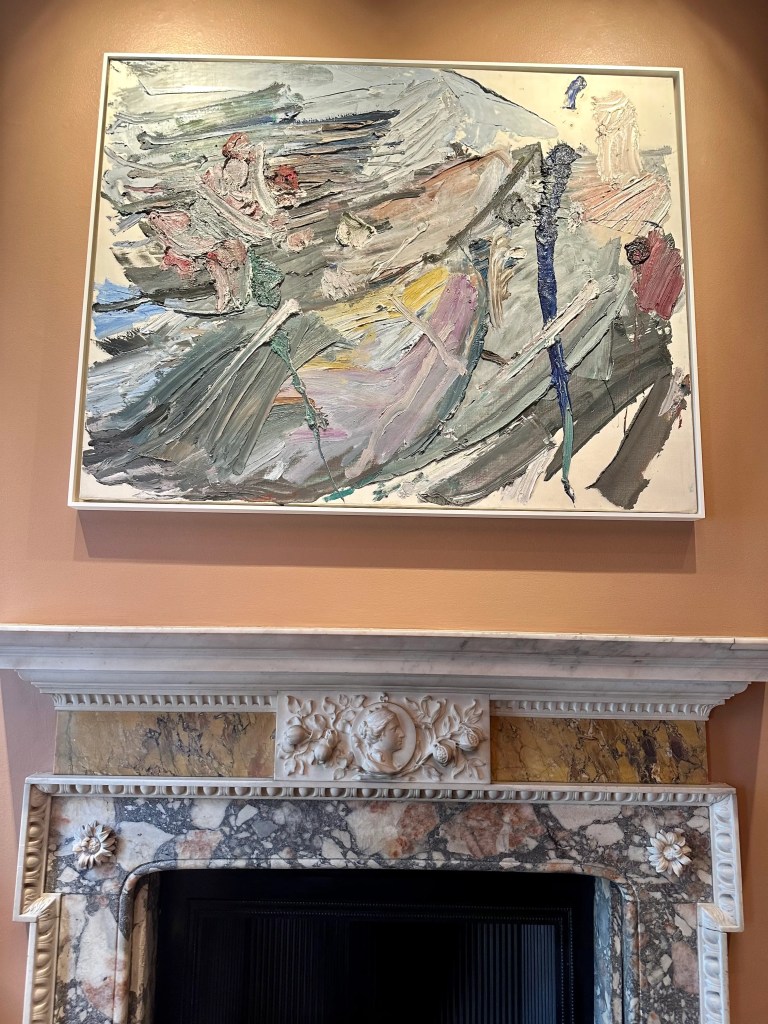
I was planning to save this visit for the Bank Holiday but I was just far too impatient. I did my best not to run up the grand staircase of the club to witness the work. The oil paintings are well laid out and their colour schemes certainly compliment that of the club’s interior design including beautiful flowers dotted around the rooms.
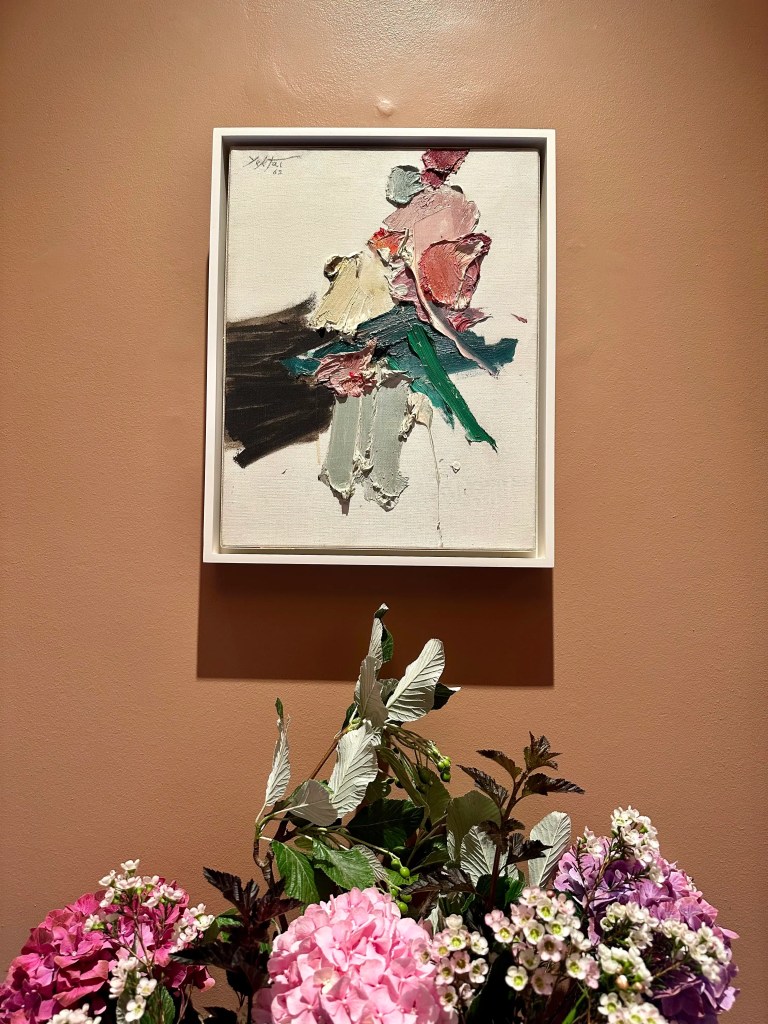
I really liked the variance in the smears, swipes and blots of thick oil paint. It looked as if a palette knife was used to spread paint on: thinner for a background and then very thickly over this to the point where the oil paint became three dimensional.
The collection focuses on Yektai’s key years following his move to New York. Yektai’s unconventional strokes imply movement yet there are strong hints of still life.
After further study in Paris at L’Ecole Beaux-Arts, Yekati returned to New York in 1947 where he was re-introduced to ‘Abstract Expressionism’ and its principal artists such as Willem de Kooning and Jackson Pollock (a favourite of mine).
Yekati’s art was not only augmented by New York’s abstract art scene but it was also influenced by poetry which he composed in Farsi and was heavily inspired by the Persian poet- Rumi.
Being both a student in Paris and New York, Yektai’s works act like abstract resumés as they blend traditional technique taught to him in Paris and more abstract visuals influenced by his experiences and studies in New York.
There is a great sense of spontaneity in Yektai’s art. The earthy colours play on gravity and instil sculpture-like qualities in the use of thick oil paint. Not only were palette knives used but Yektai often sought the utility of spatulas and sometimes simply pushing the paint straight onto the canvas from the tube,
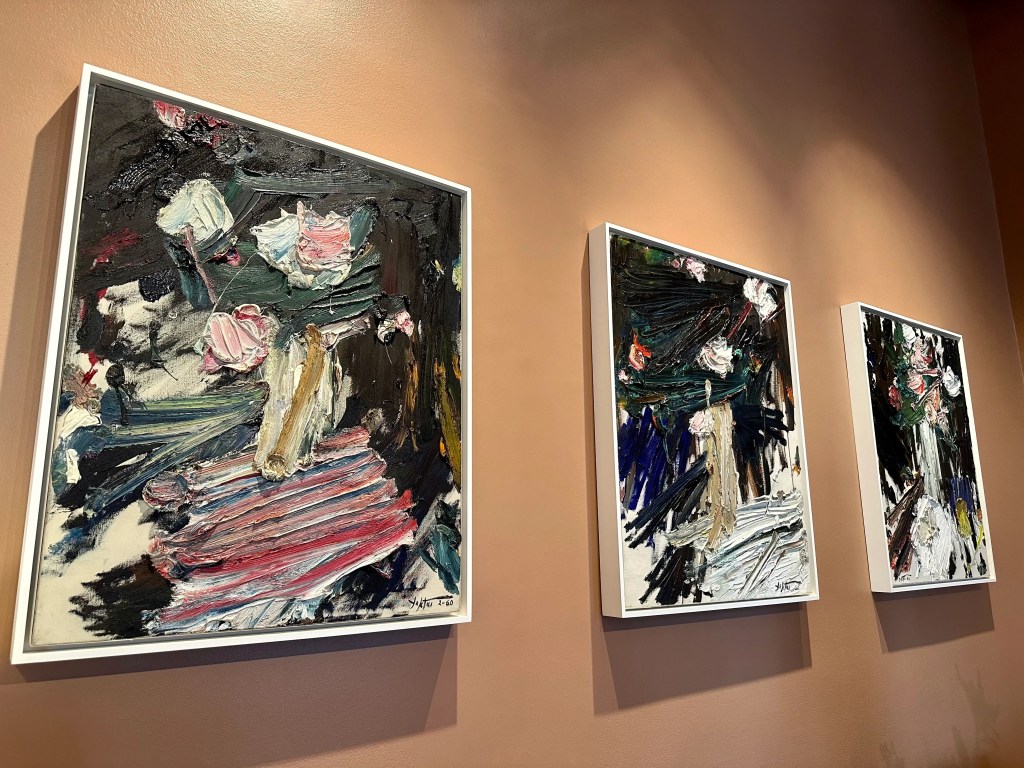
Yektai was not only a man who was a scholar of traditional, taught methods, but also a man that would instinctively push boundaries and conventional practice.
Yekati was quite a success in the US during the 50s and 60s with many pieces being displayed in MoMA. Interestingly, Yekati’s success was somewhat limited due to the effort to assert American culture at the time. Many curators selected white male American art such as his peers’ : Pollock and Rothko.
I was really disappointed to learn this. This clear-cut racism impacts middle eastern artists, but even other minorities and genders to this day.
The silver lining is that the scope has been widened, whether it be religion, race or gender. The post-war abstract scene is a far richer and diverse place that Manoucher Yektai was certainly a key part of.
 Read My Thoughts